Skip to content




Visitare Padova: cosa vedere tra arte, storia e sapori autentici
Guide to the discovery of one of the most fascinating cities in the Veneto region
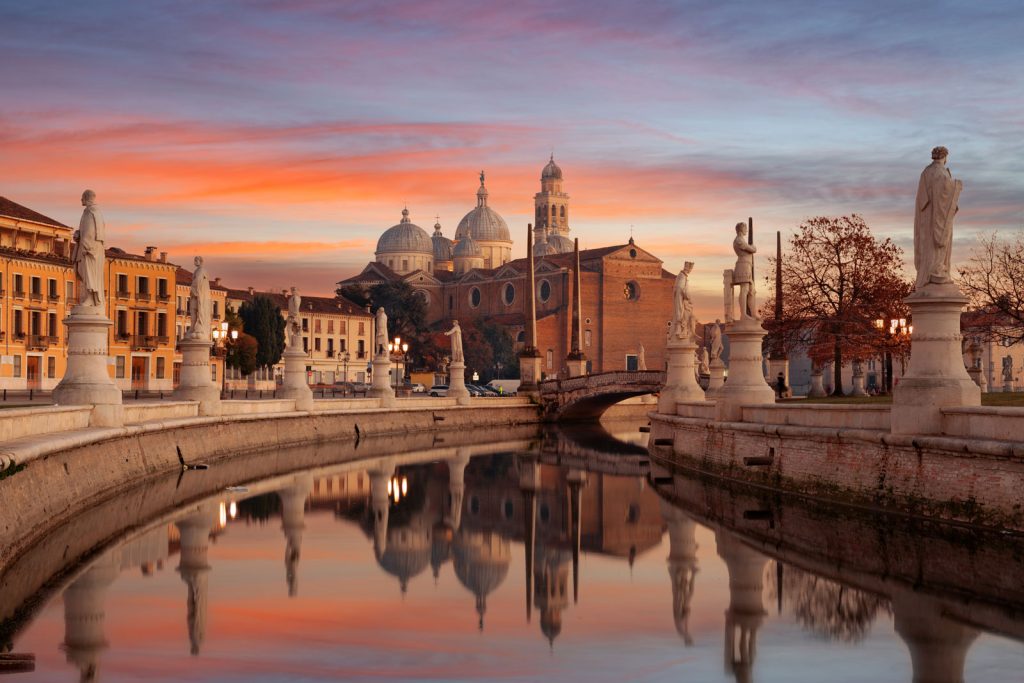
To visit Padua is to enter a city that is cultured, elegant and deeply alive. Padua is not just a destination to be traversed in a few hours, but a place to be observed calmly, letting yourself be guided by its porticoes, squares, artistic masterpieces and that authentic everyday life that still makes it one of the most interesting cities in the Veneto region.
Why visit Padua
Padua is a city that surprises with the richness of its heritage and the naturalness with which history and contemporary life coexist. The historic center retains an ancient soul, made up of palaces, markets, monumental churches and historic cafes, but at the same time it maintains a young and dynamic energy thanks to the presence of the University, one of the oldest in Europe.
To stroll through Padua is to pass through centuries of art, science and spirituality. Every corner reveals a precious detail: an elegant portico, a bustling square, a medieval facade, a silent cloister. It is an ideal city for those who love cultural tourism, but also for those looking for an authentic destination, less chaotic than other more crowded destinations.
Scrovegni Chapel: Giotto's masterpiece
Among the must-see sights in Padua, the Scrovegni Chapel holds an absolute place. The frescoes painted by Giotto in the early 14th century are considered one of the highest moments in Western painting and represent a milestone in the history of art.
To enter the Scrovegni Chapel is to immerse oneself in a powerful visual narrative, where color, emotion and storytelling come together in an extraordinary way. The visit requires reservations, but the experience repays any expectation: it is one of those places that alone are worth the trip to Padua.
For more information about this UNESCO World Heritage Site, visit the official website of Padua Urbs Picta
Prato della Valle: the scenic heart of the city
Prato della Valle is one of the most iconic spaces in Padua and among the largest squares in Europe. Its elliptical shape, the canal that runs through it, and the statues that surround it create a unique, wide and harmonious urban landscape.
It is a place to experience slowly, perhaps during a walk or on an outdoor break. Here Padua shows its most scenic but also most everyday face: students, families, travelers and citizens meet in a space that is both monumental and familiar.

Basilica of St. Anthony: spirituality, art and Paduan identity
The Basilica of St. Anthony, known simply as “The Saint,” is one of the city’s most profound symbols. A destination for international pilgrimage, it holds an artistic and religious heritage of great value and is an essential reference point for understanding the identity of Padua.
Its imposing and recognizable architecture combines different elements and creates a unique profile in the cityscape. Inside, the wealth of decorations, chapels, and works of art makes for an intense visit even for those who approach the place with a purely cultural outlook.

Botanical Garden of Padua: science and wonder
The Botanical Garden of Padua is a special place that can tell the story of the relationship between knowledge, nature and scientific research. Founded in 1545, it is the oldest university botanical garden in the world still in its original location and is part of the UNESCO heritage.
To visit the Botanical Garden is to discover an intimate and fascinating environment, where the history of botany is intertwined with the protection of biodiversity. It is a perfect stop for those who wish to add a more contemplative dimension to their trip, away from the pace of the busier streets.

Palace of Reason and downtown squares
In the heart of Padua, the Palazzo della Ragione dominates one of the liveliest areas of the city. An ancient center of civic life, it is striking for its grand hall and its prime location between Piazza delle Erbe and Piazza della Frutta.
This part of the historic center is among the most authentic in Padua. The markets, clubs, stores and the constant passage of people give back the image of a city still deeply tied to its customs. It is here that visitors can best perceive the Paduan character of history, commerce and conviviality.
Piazza dei Signori and the Caffè Pedrocchi
Continuing the visit, Piazza dei Signori offers another elegant face of the city, with the Clock Tower and architecture that tells of Padua’s political and civic past. Not far away, Caffè Pedrocchi represents a historical and cultural stop: it is not only a famous café, but a true city symbol, linked to the intellectual and social life of the 19th century.
Stopping in this area allows us to understand Padua as a city of encounter, dialogue and culture, where public spaces have always played a central role.
Paduan gastronomy: authentic flavors of the city
A trip to Padua cannot be said to be complete without discovering its gastronomic tradition. Padua’s cuisine is down-to-earth, flavorful and linked to the culture of the Veneto, with dishes that tell the story of the city’s countryside, markets and taverns.
Among the most representative flavors are bigoli, often served with rich and intense sauces, preparations made with Paduan hen, traditional Veneto risottos, and baccalà (salt cod), which is very common on local tables. Desserts also tell the story of the area, with simple and genuine recipes that accompany festive occasions and daily life.
The best way to approach Padua’s gastronomy is to sit in a trattoria in the center, being guided by the dishes of the day and wines from the Veneto region. In this way, the visit to the city also becomes a taste experience, capable of complementing the artistic and cultural itinerary.
Padua, a city to be experienced at leisure
Padua is a destination that deserves attention. It does not just offer famous monuments, but offers a complete experience, made up of art, spirituality, science, gastronomy and daily life. It is a city that allows itself to be discovered step by step, without haste, revealing a cultured and authentic beauty.
Those who choose to visit find a destination rich in content, perfect for a cultural day out but also for a more in-depth stay. Padua conquers precisely because of this: because it manages to be monumental without losing humanity, elegant without being distant, historical without giving up the vitality of the present.
How to get to Padua from Montegrotto Terme
Padua is easily accessible from Montegrotto Terme, a feature that makes it an ideal destination for a day trip. The train connection is particularly convenient: from the Terme Euganee-Abano-Montegrotto station you can reach Padua station in a few minutes, with frequent runs throughout the day.
The car is also a practical solution, especially for those who want more autonomy in travel. The journey is short and makes it possible to reach Padua in about twenty minutes, depending on traffic. Once there, it is advisable to devote time to the historic center on foot, as many of the main attractions are within walking distance of each other.
After a day of historic squares, elegant cafes and artistic masterpieces, the thermal pools at the Continental Terme Hotel in Montegrotto are the perfect way to regenerate and experience a vacation balanced between culture and relaxation.
With its strategic location in Montegrotto Terme and convenient connections to Padua, the Continental Terme Hotel is the ideal choice for those who want to discover one of the most fascinating cities in the Veneto region without sacrificing comfort and wellness. Book your stay and be won over by Padua’s authentic charm and the Continental’s spa experience.